
Who Gets the House in a Divorce in Australia?

Introduction

In the unfortunate event of a divorce, one of the most significant and emotionally charged issues to address is the division of property, particularly the family home. In Australia, the process of determining who gets the house in a divorce involves various factors that the courts consider. This article aims to shed light on the key aspects involved in the property settlement process and provide an understanding of how the decision is reached.

Property Settlement in Australia

When a couple decides to divorce, they are required to divide their assets, including the family home, as part of the property settlement process. It is important to note that Australia follows a “no-fault” principle, which means that the court does not take into account the reasons for the divorce when determining property division.

The Family Law Act 1975 is the legislation that governs property settlements in Australia. According to the Act, the court follows a four-step process to determine a fair and equitable distribution of assets:

Step 1: Identification and Valuation of Assets

The first step involves identifying all assets, liabilities, and financial resources owned by both parties, including the family home. This includes not only properties but also vehicles, investments, savings, superannuation, and any other significant assets. Once identified, these assets are valued, usually with the assistance of independent experts such as property valuers or accountants.

Step 2: Assessment of Contributions

In this step, the court evaluates the financial and non-financial contributions made by each spouse throughout the marriage. Financial contributions typically include income, savings, and property brought into the marriage, while non-financial contributions encompass homemaking, child-rearing, and any other relevant contributions.

It is worth noting that the court also considers post-separation contributions, such as any inheritances or windfalls received after separation, when assessing the contributions made by each party.

Who gets the house in a divorce in Australia?

Step 3: Future Needs and Factors

The court then takes into account the future needs and circumstances of both parties. This includes factors such as the age and health of each spouse, their earning capacities, financial resources, and care arrangements for any children involved. The court aims to achieve a division that is just and equitable based on the individual circumstances of the case.

Step 4: Just and Equitable Outcome

The final step involves determining a fair and equitable outcome based on the considerations outlined in the previous steps. The court may make adjustments to the division of property to account for any disparities or imbalances identified during the assessment process.

Considerations for the Family Home

When it comes to the family home, there are several additional factors that the court takes into account:

Primary Caregiver

If one party has been the primary caregiver for the children, the court may prioritize their housing needs to ensure stability and continuity for the children. In such cases, the primary caregiver may have a greater chance of retaining the family home.

Financial Capacity

The financial capacity of each spouse is a crucial consideration. If one party has significantly fewer financial resources, the court may lean towards awarding them a larger share of the property, including the family home, to ensure they have a secure living arrangement.

Alternate Arrangements

In some cases, the court may determine that it is not practical or financially viable for either party to retain the family home. In such situations, the court may order the sale of the property and the proceeds to be divided between the spouses based on their contributions and needs.

house in a divorce in Australia

Alternative Options

It’s important to note that the court’s decision is not the only option for property settlement. Couples going through a divorce can also consider alternative methods of reaching a property settlement, such as negotiation, mediation, or collaborative law. These processes provide an opportunity for the parties to work together and come to an agreement that suits their individual circumstances, including the division of the family home. https://www.sydneyfamilycriminaldefencelawyers.com.au/finalising-property/

Seeking Legal Advice

Divorce and property settlement can be complex and emotionally challenging. It is highly recommended that individuals seek legal advice from a qualified family lawyer who specializes in family law and property settlements. A family lawyer can provide guidance, explain the legal process, and help protect your rights and interests throughout the proceedings.

It’s important to note that this article provides a general overview of the property settlement process in Australia, and the outcome of each case may vary depending on the specific circumstances and the court’s discretion. Consulting with a family lawyer will ensure you receive tailored advice based on your unique situation.

Conclusion

The division of the family home in a divorce in Australia involves a comprehensive assessment of various factors, including the contributions of each spouse, future needs and circumstances, and the best interests of any children involved. The court aims to achieve a fair and equitable outcome based on these considerations. However, alternative methods of property settlement, such as negotiation or mediation, provide couples with the opportunity to reach a mutually agreeable solution. If you are going through a divorce and are unsure about the division of property, it is essential to seek legal advice from a qualified family lawyer to understand your rights and options. For lawyer website design see here.


 

How Long Does It Take for an Appeal to Be Approved?

When it comes to the appeals process, individuals often wonder how long it takes for their appeal to be approved. The duration of an appeal can vary depending on several factors. In this article, we will explore the different factors that can influence the time it takes for an appeal to be approved.

Understanding the Appeals Process

The appeals process is a legal mechanism that allows individuals to challenge a decision made by a court or administrative body. It provides a way to seek a review of a decision that one believes to be incorrect or unjust. Appeals can be filed in various situations, including criminal cases, civil lawsuits, and administrative proceedings.

Factors That Affect the Duration of an Appeal

Several factors can impact the length of time it takes for an appeal to be approved:

1. Complexity of the Case

The complexity of the case is a significant factor that affects the duration of an appeal. Appeals involving complex legal issues or extensive factual disputes may require more time for thorough review and consideration.

2. Court or Administrative Backlog

The backlog of cases in the court or administrative system can also impact the timeline of an appeal. If the court or administrative body has a large number of pending cases, it may take longer for your appeal to be reviewed and decided.

3. Appellate Court’s Caseload

The caseload of the appellate court hearing your appeal can influence the time it takes for your appeal to be approved. Appellate courts often handle numerous cases, and the availability of judges and resources can affect the speed of the appeals process.

4. Procedural Requirements

The procedural requirements of the appeals process can also contribute to the overall duration. These requirements may include filing deadlines, document submissions, and adherence to specific procedural rules. Failure to comply with these requirements can lead to delays in the processing of your appeal.

5. Complexity of the Appellate Brief

The quality and complexity of the appellate brief submitted by the appellant can impact the time it takes for an appeal to be approved. A well-crafted brief that effectively presents legal arguments and supporting evidence can expedite the review process.

6. Resolution Method

The chosen resolution method for the appeal can affect the timeline as well. Some appeals may be resolved through written submissions, while others may require oral arguments or further evidentiary hearings. The selected method can influence the overall duration of the appeal.

How long does it take for an appeal to be approved?

Typical Timeframe for an Appeal

It is important to note that the timeframe for an appeal can vary significantly depending on the aforementioned factors and the specific circumstances of each case. However, as a general guideline, appeals can take anywhere from several months to a few years to be approved.

In less complex cases, where there are no significant backlogs or procedural delays, an appeal can be approved within a few months. However, more complex cases or cases involving a backlog of appeals and procedural complexities may take a considerably longer time to be resolved.

In some instances, appeals can be expedited if there are urgent circumstances or if the court recognizes the need for a speedy resolution. This usually applies to cases where immediate action is required to prevent irreparable harm or when the rights of the parties involved are at risk.

Additionally, different jurisdictions may have their own rules and guidelines regarding the appeals process, which can further affect the timeframe. It’s important to consult with a legal professional or research the specific rules of your jurisdiction to get a better understanding of the expected duration.

During the appeals process, it is common for multiple stages to take place. These stages may include the initial filing of the appeal, the submission of briefs by both parties, oral arguments, and the final decision by the appellate court. Each stage requires time for preparation, review, and scheduling, which contributes to the overall duration.

appeal to be approved

Furthermore, the workload of the appellate court and the availability of judges can significantly impact the timeline. Appellate courts typically handle a substantial number of cases, and it may take time for your appeal to be assigned to a judge and given the attention it deserves.

It’s important to remain patient throughout the appeals process and to stay in contact with your legal representative for updates on the progress of your appeal. They can provide you with valuable information about the estimated timeline and any potential delays that may arise. For traffic appeal service see here.

In conclusion, the duration of an appeal being approved can vary greatly depending on several factors. The complexity of the case, court or administrative backlogs, the appellate court’s caseload, procedural requirements, the quality of the appellate brief, and the chosen resolution method all contribute to the overall timeline. While it is challenging to provide an exact timeframe, appeals can typically take anywhere from several months to a few years to be approved. Being aware of these factors and maintaining open communication with your legal representative will help you navigate the appeals process more effectively.

What is the Process Appeal NSW: A Comprehensive Guide

Understanding the Importance of Process Appeal in NSW

Introduction

When dealing with legal matters in New South Wales (NSW), it is essential to understand the concept of process appeal. Process appeal refers to the right of individuals to challenge the fairness and legality of the procedures followed in a legal case. It ensures that the principles of natural justice are upheld, providing a safeguard against any potential miscarriage of justice. In this comprehensive guide, we will explore the process appeal in NSW, its significance, and the steps involved in filing a process appeal.

Key Elements of Process Appeal in NSW

Natural Justice

Natural justice is a fundamental principle that underpins the process appeal in NSW. It encompasses two essential elements: the right to be heard and the right to a fair and unbiased decision-maker. These principles ensure that all parties involved in a legal matter are given a fair opportunity to present their case and have their arguments considered in an impartial manner.

What is the process appeal NSW?

Procedural Fairness

Procedural fairness is another critical aspect of the process appeal in NSW. It requires that the procedures followed in a legal case adhere to the standards of fairness and due process. This includes providing adequate notice to the parties involved, allowing them sufficient time to prepare their case, and ensuring that the decision-maker is unbiased and impartial.

The Process Appeal Process in NSW

Identifying Grounds for Appeal

The first step in the process appeal in NSW is to identify the grounds on which the appeal is based. Common grounds for process appeals include:

Denial of natural justice: If a party believes that they were not given a fair opportunity to present their case or that the decision-maker was biased or prejudiced, they can appeal on the grounds of denial of natural justice.

Procedural irregularities: If there were significant procedural errors or irregularities during the legal proceedings that may have affected the outcome, a process appeal can be filed.

Filing the Notice of Appeal

Once the grounds for the process appeal have been identified, the next step is to file a Notice of Appeal with the appropriate appellate court. The Notice of Appeal should include the details of the case, the grounds for appeal, and any supporting evidence or legal arguments. For appeals see here.

Review and Determination

After the Notice of Appeal has been filed, the appellate court will review the appeal and determine whether it has merit. The court may request additional documentation or schedule a hearing to allow both parties to present their arguments.

process appeal NSW

During the review process, the court will consider the procedural fairness of the original legal proceedings and assess whether any errors or irregularities occurred. If the court finds that there were substantial procedural defects, it may order a retrial or set aside the original decision.

Appeal Hearing

In some cases, an appeal hearing may be conducted, where both parties have the opportunity to present their arguments before the appellate court. The court will carefully consider the evidence and legal submissions from both sides before reaching a decision.

Court’s Decision

Once all arguments and evidence have been presented, the appellate court will make a decision regarding the process appeal. The court may affirm the original decision, modify it, or set it aside, depending on the circumstances of the case.

Conclusion

The process appeal in NSW plays a crucial role in upholding the principles of natural justice and ensuring procedural fairness in legal matters. By allowing individuals to challenge the procedures followed in a case, it serves as a safeguard against potential miscarriages of justice. Understanding the process appeal process in NSW is essential for anyone involved in a legal matter to protect their rights and ensure a fair outcome.

What Happens If You Lose an Appeal: Understanding the Consequences

When involved in a legal dispute, appealing a court’s decision is a common recourse. However, not all appeals result in a favorable outcome. If you find yourself on the losing end of an appeal, it’s essential to understand the potential consequences. In this article, we will explore what happens when you lose an appeal and shed light on the implications it may have on your case and future legal options.

1. The Finality of the Decision

One of the significant consequences of losing an appeal is the finality of the decision. When an appeal is denied or dismissed, the ruling of the lower court becomes binding and enforceable. This means that the unfavorable outcome you sought to challenge now stands, potentially impacting your rights, obligations, and legal standing.

Implications:

• Compliance: Losing an appeal often requires complying with the original court’s decision, which may involve financial payments, penalties, or other legal obligations.

• Precedent: An unfavorable appellate decision could set a precedent that affects similar cases in the future, potentially limiting legal avenues for others facing similar circumstances.

• Exhaustion of Remedies: Losing an appeal may exhaust your available legal remedies within the current jurisdiction, making it challenging to pursue further avenues for redress.

2. Limited Scope for Further Appeals

When an appeal is unsuccessful, the options for further appeals become limited. In most jurisdictions, there are specific rules and procedures governing the appeals process. These rules outline the circumstances under which a higher court will review a case. Losing an appeal may restrict your ability to pursue additional appeals, limiting your chances of overturning the original decision.

Implications:

• Dismissal with Prejudice: Some appellate decisions may be dismissed with prejudice, meaning that you are permanently barred from re-filing the appeal or seeking any other recourse for the same matter.

• Grounds for Appeal: Losing an appeal may restrict your ability to raise certain legal arguments or introduce new evidence in future proceedings, as those issues may have been considered and rejected during the appellate process.

• Time and Resources: Pursuing further appeals can be time-consuming, costly, and emotionally draining. Losing an appeal may force you to evaluate the feasibility of continuing the legal battle.

3. Financial and Emotional Impact

An unfavorable appellate decision can have significant financial and emotional consequences for the parties involved. Legal disputes often involve substantial costs, including attorney fees, court fees, and expenses related to gathering evidence. Losing an appeal means that these expenses may be irrecoverable, leaving you responsible for the financial burden.

What happens if you lose an appeal?

Implications:

• Attorney Fees: Losing an appeal may result in the loss of attorney fees incurred during the appellate process. Depending on the agreement with your lawyer, you may still be liable for those fees, even if the appeal is unsuccessful.

• Additional Costs: In some cases, losing an appeal may result in additional costs imposed by the opposing party, such as their attorney fees or expenses related to the appeal.

• Emotional Toll: Legal battles can be emotionally draining, and losing an appeal can intensify the disappointment, frustration, and stress experienced throughout the process.

4. Exploring Alternative Dispute Resolution

After losing an appeal, it may be worth considering alternative dispute resolution methods to find a resolution outside of the courtroom. Mediation or arbitration can provide an opportunity for both parties to negotiate and reach a mutually agreeable settlement. While alternative dispute resolution methods may not overturn the original court decision, they can offer a more efficient and cost-effective way to resolve the dispute and move forward.

 if you lose an appeal

Implications:

• Mediation: Mediation involves a neutral third party who facilitates communication between the parties to help them find common ground and reach a settlement. It can be a less adversarial approach compared to litigation and may allow for more creative solutions.

• Arbitration: Arbitration involves presenting the dispute to a neutral arbitrator or a panel of arbitrators who render a binding decision. While it resembles a trial, arbitration is generally less formal and more flexible, with the parties having more control over the process.

• Negotiation: Direct negotiation between the parties, with or without legal representation, can also be an option. It allows for open discussion and potential compromises, giving both parties a chance to voice their concerns and find a middle ground.

5. Seeking Legal Advice

If you lose an appeal, it’s crucial to consult with an experienced attorney to assess your options and understand the potential implications. An attorney can provide guidance on the best course of action based on the specifics of your case and jurisdiction. They can help you navigate the legal landscape, explore alternative strategies, or evaluate the possibility of pursuing further legal avenues, if available.

Implications:

• Case Evaluation: An attorney can review your case, assess the strengths and weaknesses, and provide an objective analysis of the likelihood of success in further legal proceedings or alternative dispute resolution methods.

• Legal Strategy: Based on their expertise, an attorney can devise a legal strategy that aligns with your goals and maximizes your chances of achieving a favorable outcome, whether through negotiation, settlement, or further litigation.

• Legal Procedures: Navigating the legal system can be complex, and an attorney can ensure that you comply with all necessary procedures and deadlines, protecting your rights and preventing potential pitfalls.

Conclusion

Losing an appeal can have significant consequences, including the finality of the decision, limited options for further appeals, financial and emotional impact, and the need to explore alternative dispute resolution methods. Understanding these implications is essential for individuals involved in legal disputes to make informed decisions about their cases. Seeking legal advice from an experienced attorney can provide guidance and help navigate the complexities of the legal system. While losing an appeal may be disheartening, it does not necessarily mark the end of the road. Exploring alternative approaches and considering future legal options can provide opportunities to find resolution and move forward. For Sydney family & criminal defence lawyers appeals see here.

In summary, it’s crucial to be prepared for the potential outcomes when pursuing an appeal, but also to remain resilient and explore all available options to protect your rights and seek a just resolution to your legal dispute.

Grounds for Appeal in NSW: Understanding the Process

Introduction

When a court renders a decision in a legal matter, it is not necessarily the end of the road for the parties involved. In the Australian state of New South Wales (NSW), individuals and organizations have the right to appeal a judgment they consider unfair or incorrect. The appeals process allows a higher court to review the decision made by a lower court to determine if any errors were made. This article will explore the grounds for appeal in NSW, providing a comprehensive understanding of the process.

1. Errors of Law

One of the primary grounds for appeal in NSW is the existence of errors of law. If a party believes that the lower court made a mistake in interpreting or applying the law, they can appeal the decision. An error of law may occur when a judge incorrectly interprets a statute, misapplies legal principles, or fails to consider relevant case precedents. It is important to note that a mere disagreement with the lower court’s decision is not sufficient to establish an error of law.

2. Unreasonable Findings of Fact

Another ground for appeal is when a party believes that the lower court’s findings of fact were unreasonable. The appellate court will not interfere with the lower court’s findings of fact unless they are clearly erroneous or unsupported by the evidence presented during the trial. If a party can demonstrate that the lower court’s factual findings were unreasonable or not supported by the evidence, they may have a valid ground for appeal.

3. Procedural Irregularities

Procedural irregularities during a trial can also provide grounds for appeal in NSW. If there were significant errors or unfairness in the conduct of the trial, it may have compromised the fairness of the proceedings and the outcome. Procedural irregularities can include a failure to follow proper legal procedures, denial of a fair opportunity to present evidence, or bias on the part of the judge or jury. Appellate courts are particularly concerned with ensuring that trials are conducted in a fair and just manner.

What are the grounds for appeal in NSW?

4. Sentence Severity or Inappropriateness

Appeals can also be based on the grounds of sentence severity or inappropriateness. If a party believes that the sentence imposed by the lower court is too harsh or disproportionate to the offense committed, they can seek to have the sentence reviewed. The appellate court will consider factors such as the nature of the offense, the offender’s circumstances, and any mitigating or aggravating factors to determine if the sentence was excessive or inappropriate.

5. Fresh Evidence

In certain circumstances, the discovery of new evidence that was not available during the original trial can be grounds for appeal. This is known as “fresh evidence.” To be successful, the fresh evidence must be relevant, credible, and likely to have had a significant impact on the outcome of the case. The appellate court will assess whether the new evidence is of sufficient importance to warrant a rehearing or a reconsideration of the previous decision.

Conclusion

The appeals process in NSW provides an opportunity for individuals and organizations to challenge decisions they believe to be unfair or incorrect. Grounds for appeal can include errors of law, unreasonable findings of fact, procedural irregularities, sentence severity or inappropriateness, and the discovery of fresh evidence. It is essential to consult with a qualified lawyer to understand the specific grounds for appeal in a particular case and navigate the complex appellate process effectively. By exercising their right to appeal, individuals and organizations can seek justice and ensure that legal decisions align with the principles of fairness and justice. Understanding the grounds for appeal in NSW is crucial for anyone involved in a legal dispute, as it allows them to pursue a second chance at achieving a more favorable outcome.

By appealing on the grounds of errors of law, individuals can challenge a lower court’s interpretation or application of legal principles. This can be a significant factor in cases where a judge has misinterpreted a statute, failed to consider relevant precedents, or made mistakes in applying the law to the facts of the case. It is important to note that a mere disagreement with the lower court’s decision is not sufficient grounds for appeal. Instead, it must be shown that a clear error of law occurred.

grounds for appeal in NSW

Another potential ground for appeal is the presence of unreasonable findings of fact. Appellate courts generally do not interfere with the lower court’s factual findings unless they are deemed clearly erroneous or unsupported by the evidence presented during the trial. If a party can demonstrate that the lower court’s findings of fact were unreasonable or not based on the evidence, they may have a valid ground for appeal.

Procedural irregularities during a trial can also provide grounds for appeal. This includes situations where there were significant errors or unfairness in the conduct of the trial that compromised the fairness of the proceedings and potentially influenced the outcome. Appellate courts are particularly concerned with ensuring that trials are conducted in a fair and just manner, and any procedural irregularities can be raised as grounds for appeal.

Appeals can also be pursued based on the sentence severity or inappropriateness. If a party believes that the sentence imposed by the lower court is unduly harsh, excessive, or disproportionate to the offense committed, they can seek a review of the sentence. The appellate court will consider various factors, including the nature of the offense, the circumstances of the offender, and any mitigating or aggravating factors, to determine if the sentence was appropriate or if it should be adjusted.

In certain cases, the discovery of fresh evidence that was not available during the original trial can be a valid ground for appeal. This evidence must be relevant, credible, and likely to have had a significant impact on the outcome of the case. Appellate courts will carefully assess the fresh evidence and determine whether it warrants a rehearing or reconsideration of the previous decision.

It is important to understand that the appeals process can be complex and requires the expertise of a qualified lawyer. Consulting with a legal professional who specializes in appellate matters can help individuals and organizations navigate the intricacies of the appeals process in NSW effectively. For traffic law appeals see here.

In conclusion, the grounds for appeal in NSW provide an avenue for challenging unfair or incorrect legal decisions. Whether it is based on errors of law, unreasonable findings of fact, procedural irregularities, sentence severity or inappropriateness, or the discovery of fresh evidence, the appeals process allows individuals and organizations to seek justice and ensure that their rights are protected. By exercising the right to appeal, parties can have their case reviewed by a higher court and potentially obtain a more favorable outcome.

How to Appeal a Disqualified License in NSW: A Step-by-Step Guide

Understanding License Disqualification in NSW

What is License Disqualification?

How do I appeal a disqualified licence in NSW? License disqualification refers to the suspension or revocation of a driver’s license by the Roads and Maritime Services (RMS) in New South Wales (NSW). This penalty is imposed when a driver commits serious traffic offenses or accumulates a certain number of demerit points within a specified period.

Reasons for License Disqualification

There are several reasons why your license may be disqualified in NSW. Some common reasons include:

Drink driving or driving under the influence of drugs.
Speeding or reckless driving.
Accumulating demerit points exceeding the threshold within a specific period.
Driving while disqualified or suspended.
Causing death or injury due to negligent driving.

How do I appeal a disqualified licence in NSW?

The Consequences of License Disqualification

When your license is disqualified, you are not legally permitted to drive any vehicle on NSW roads during the disqualification period. If you drive while disqualified, you may face severe penalties, including fines, imprisonment, and further extension of the disqualification period.

Appealing a Disqualified License in NSW

Step 1: Understand the Disqualification Notice

Upon being disqualified, you will receive a disqualification notice from the RMS. This notice provides details of the disqualification, including the start and end dates of the disqualification period. It is essential to carefully review this notice and understand the reasons for disqualification.

Step 2: Seek Legal Advice

If you wish to appeal the license disqualification, it is highly recommended to consult with a qualified traffic lawyer. They will assess your case, advise you on the best course of action, and guide you through the appeal process.

Step 3: Lodge an Appeal

To appeal the license disqualification, you must lodge an appeal with the Local Court within 28 days of receiving the disqualification notice. The appeal should include a completed ‘Notice of Appeal’ form, which can be obtained from the court or online. Make sure to provide all necessary information and supporting documents.

Step 4: Prepare for the Appeal Hearing

Once your appeal is lodged, the court will schedule a hearing. It is crucial to prepare for the hearing by gathering relevant evidence and supporting documentation. This may include witness statements, medical records, or any other evidence that strengthens your case.

disqualified licence in NSW
How do I appeal a disqualified licence in NSW?

Step 5: Attend the Appeal Hearing

On the scheduled hearing date, you must attend court along with your legal representation. Present your case, providing evidence and arguments to support your appeal. The court will consider the evidence presented by both parties and make a decision.

Factors Considered by the Court

Prior Traffic Offenses

The court may take into account your previous driving history, including any previous traffic offenses, to determine the severity of the penalty.

Circumstances of the Offense

The circumstances surrounding the offense, such as the level of intoxication (if applicable), speed, and potential harm caused, will also be considered by the court.

Remorse and Rehabilitation

Expressing genuine remorse for your actions and demonstrating efforts towards rehabilitation, such as attending counseling or rehabilitation programs, may positively influence the court’s decision.

family obligations, the court may take this into consideration when making a decision.

Previous Good Character and Community Contributions

If you have a history of good character and have made positive contributions to your community, such as volunteer work or involvement in charitable organizations, it can be presented as a factor in your favor during the appeal.

Final Thoughts

Successfully appealing a disqualified license in NSW requires a thorough understanding of the process and strong legal representation. It is crucial to seek legal advice from a qualified traffic lawyer who can guide you through the appeal process, gather the necessary evidence, and present a compelling case in court.

Remember, each case is unique, and the outcome of an appeal can vary depending on the circumstances. By following the steps outlined in this guide and presenting a strong case, you can increase your chances of having your license disqualification overturned or reduced. https://www.sydneyfamilycriminaldefencelawyers.com.au

However, it is important to note that this article serves as a general guide and should not be considered legal advice. For specific information and advice tailored to your situation, consult with a professional traffic lawyer who can provide accurate guidance based on your individual circumstances.

How Often Are Appeals Successful in NSW?

The Appeals Process in NSW

Understanding the Success Rate of Appeals

When it comes to the legal system, the ability to appeal a decision can provide individuals with a glimmer of hope in seeking justice. In New South Wales (NSW), appeals serve as a mechanism to challenge and review court decisions made at lower levels. However, the success of these appeals varies depending on several factors. In this article, we will delve into the success rate of appeals in NSW and shed light on what individuals can expect when pursuing an appeal.  How often are appeals successful in NSW?

The appeals process in NSW involves seeking a higher court’s review of a decision made by a lower court. The Court of Appeal, which is part of the Supreme Court, is primarily responsible for hearing appeals in NSW. This court consists of several judges who carefully consider the arguments presented by both parties and review the evidence before reaching a decision.

Factors Affecting Appeal Success Rate

The success rate of appeals in NSW can be influenced by various factors. It is essential to understand these factors when considering the likelihood of a successful appeal. Some of the key factors include:

1. Strength of Legal Grounds

One of the most crucial factors in determining the success of an appeal is the strength of the legal grounds on which it is based. Appellants must demonstrate that an error of law or a miscarriage of justice has occurred in the lower court’s decision. If the appellant can present strong legal arguments supported by relevant statutes and case precedents, it increases the chances of a successful appeal.

How often are appeals successful in NSW?

2. Quality of Legal Representation

The quality of legal representation during the appeals process can significantly impact the outcome. Skilled and experienced appellate lawyers possess the expertise to present persuasive arguments and navigate complex legal procedures. They can effectively analyze the lower court’s decision, identify legal errors, and construct compelling cases for their clients. Adequate legal representation plays a vital role in increasing the likelihood of a successful appeal.

3. Applicable Legal Standards

The appeals process revolves around the application of legal standards. The Court of Appeal examines whether the lower court applied the correct legal standards and properly interpreted the law. If the lower court made an error in applying the law or misinterpreted it, the Court of Appeal may overturn the decision and grant a successful appeal. Understanding the specific legal standards relevant to the case is crucial for assessing the potential success of an appeal.

4. Strength of Evidence

In some cases, the strength of the evidence presented can heavily influence the outcome of an appeal. The Court of Appeal carefully reviews the evidence submitted during the trial or hearing at the lower court. If the appellant can demonstrate that the evidence was improperly considered or that new evidence has come to light, it may enhance the chances of a successful appeal. However, the Court of Appeal generally does not re-evaluate the credibility of witnesses or the weight of evidence unless exceptional circumstances exist.

Success Rate of Appeals in NSW

Determining an exact success rate for appeals in NSW is challenging, as it can vary depending on multiple factors. However, statistical data provides some insights into the overall outcomes of appeals in recent years.

According to the Judicial Commission of NSW, the success rate for civil appeals in the Court of Appeal between 2016 and 2019 was approximately 27%. This means that roughly 27% of civil appeals resulted in a successful outcome for the appellant. For criminal appeals during the same period, the success rate was around 17%.

It is important to note that these figures are approximate and may not reflect the success rate for every individual case. The success rate of appeals can vary depending on the specific circumstances, legal issues involved, and the quality of representation. Each case is unique, and success cannot be guaranteed solely based on statistical data.

It is worth mentioning that the success rate of appeals can also be influenced by factors such as the complexity of the case, the availability of new evidence, and the specific judges presiding over the appeal. Additionally, the success rate may differ across different types of cases, such as civil appeals versus criminal appeals.

Ultimately, the success of an appeal in NSW relies on presenting compelling legal arguments, demonstrating errors or miscarriages of justice, and having skilled legal representation. While the statistics provide a general idea of the success rate, it is essential to consult with an experienced appellate lawyer who can assess the specific details of your case and provide tailored advice. https://www.sydneyfamilycriminaldefencelawyers.com.au/appeals/

appeals successful in NSW

In conclusion, appeals in NSW can be successful, but the outcome depends on various factors such as the strength of legal grounds, quality of representation, applicable legal standards, and the strength of evidence. Understanding these factors and seeking professional legal guidance are crucial steps in navigating the appeals process effectively.

How Long Can You Go to Jail for Assault and Battery in Australia?

Introduction

How long can you go to jail for assault and battery in Australia? In Australia, both assault and battery are considered to be serious forms of criminal offence. A person may be subject to serious consequences, including imprisonment, depending on the gravity of the offence they have committed. In the following paragraphs, we will discuss the potential jail sentences for those convicted of assault and battery in Australia.

What is Assault and Battery?

Both assault and battery are considered to be separate crimes, despite the fact that they are sometimes charged simultaneously. In the crime of assault, the offender makes threats or makes an attempt to do another person physical harm, but in the crime of battery, the offender actually causes another person physical injury. In Australia, the legal definitions of assault and battery might be somewhat different from one Australian state to another.

How long can you go to jail for assault and battery in Australia?

Assault

A person is said to have been assaulted if they were subjected to any kind of behaviour that made them fear for their own safety or that put them in imminent danger of being harmed. This can involve threats made verbally, gestures made physically, or even attempts to cause bodily harm. Depending on the seriousness of the incident, a person can be prosecuted with either a summary or an indictable offence for assault.

Battery

Battery refers to the act of actually causing physical injury to another person. This can range from a light push or shove all the way up to more serious acts of violence like hitting or kicking someone. In the same way that assault can be charged as a summary or indictable offence, battery can also be charged in any way.

Penalties for Assault and Battery in Australia

In Australia, the penalty for assault and battery can differ from case to case based on the seriousness of the offence, the age of the victim, and whether or not the perpetrator has any previous convictions for similar offences.

 jail for assault and battery in Australia

Summary Offenses

The Magistrates’ Court is the typical venue for the hearing of summary offences, which are considered to be less serious offences. The following are the most severe consequences that can be imposed on those found guilty of a summary offence for assault and battery:

  • Assault – 2 years imprisonment
  • Battery – 3 years imprisonment

Indictable Offenses

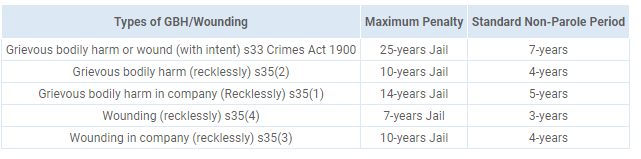
Indictable offences are those that involve more serious consequences and are typically tried in a superior court. The following are the maximum sentences that can be imposed for indictable offences related to assault and battery:The minimum sentence for assault that results in bodily harm is seven years in prison.

  • Assault causing bodily harm – 7 years imprisonment
  • Assault causing grievous bodily harm – 14 years imprisonment
  • Recklessly causing injury – 10 years imprisonment
  • Intentionally causing injury – 20 years imprisonment
  • Aggravated burglary and assault – 25 years imprisonment
  • Murder – Life imprisonment

Factors That Can Affect the Penalties for Assault and Battery

In Australia, the punishment for assault and battery can be significantly different depending on a number of different variables. These include, but are not limited to:

Prior Criminal Convictions

It is possible that the penalty for assault and battery will be increased for a person who has a history of criminal convictions. This is due to the fact that they are deemed to be repeat offenders and, as a result, are more likely to commit more crimes. For assault charges lawyer in sydney see here.

Severity of the Offense

The seriousness of the offence is another factor that might play a role in determining the consequences for assault and battery. For instance, a person who commits an assault that results in major physical harm or death will likely be sentenced to a longer period of incarceration than someone who commits an assault that just results in minor injuries.

Age of the Victim

Assaults and battery committed against minors or adults who are unable to defend themselves are regarded as more serious crimes and may result in more severe punishments.

Conclusion

In Australia, assault and battery are both considered to be significant criminal offences, and the punishments for these offences can be quite harsh. The gravity of the crime, the age of the victim, and whether or not the offender has any past convictions for a similar offence all go into the determination of the appropriate punishment. It is essential to emphasise that violent behaviours such as assault and battery are not tolerated, and those who engage in these behaviours will be held accountable by the law for their conduct.

It is imperative that you seek the counsel of a criminal defence attorney as soon as possible if you or someone you know has been charged with assault and battery. They are able to assist you in understanding the legal procedure and your rights, and they will strive to reduce the severity of any potential punishments.

In a nutshell, depending on the gravity of the crime, the punishments for assault and battery in Australia can range anywhere from a few months to life in prison. In order to avoid being prosecuted for these criminal offences, it is vital to have a solid understanding of the legal definitions of assault and battery, as well as the elements that can alter the consequences. If you find yourself in a situation where you could be charged with assault or violence, you should always seek the opinion of an attorney.

How Long Does an Assault Charge Stay on Your Record in Australia?

Understanding Assault Charges in Australia

How long does an assault charge stay on your record in Australia? When one person wilfully applies force to another person without first obtaining their consent, this behaviour is considered to be the criminal act known as assault. Charges of assault can range from relatively small actions, such as pushing or shoving, to significantly more serious offences, such as aggravated assault, which entails causing substantial bodily harm to another person. The law in Australia makes a distinction between two different kinds of assault: common assault and assault causing actual bodily harm, which is abbreviated as “AOABH.”

How long does an assault charge stay on your record in Australia?

Assault in the first degree, also known as common assault, is the less serious of the two types of assault charges. It is described as an assault that does not result in any physical harm. Assault in its most common form can result in fines or perhaps up to two years in prison. On the other hand, being charged with AOABH is a more serious offence because it entails intentionally causing bodily harm to another individual. In Australia, the offence of AOABH has a maximum sentence of five years in prison.

How Long Does an Assault Charge Stay on Your Record?

In Australia, if you are charged with assault, the charge will appear on your criminal record. If you have been convicted of a crime, your record will be made public. A person’s criminal history is a document that details all of the offences for which they have been found guilty, together with the sentence that they were given for each crime. The length of time that an assault charge remains on your record is determined by the seriousness of the alleged assault as well as the state or territory in which the alleged assault took place.

assault charge stay on your record

After being convicted of a misdemeanour assault offence in the majority of states and territories, the charge will remain on your record for a period of ten years beginning on the date of the conviction. If you are convicted of an assault charge that is considered more serious, such as AOABH, the charge will remain on your record for a period of 15 years after the conviction. On the other hand, the offence will stay on your record for the rest of your life if it was committed in certain states and territories, such as New South Wales.

Can You Get an Assault Charge Expunged from Your Record?

It is possible, depending on the specifics of your case, to have an assault charge removed from your criminal record and wiped. The legal procedure of having a criminal offence deleted from a person’s record is referred to as expungement. However, the procedure for having a criminal record expunged will be different depending on which state or territory the infraction was committed in.

You are eligible to submit a petition to have a conviction expunged in the majority of states and territories if you were younger than 18 years old at the time of the offence or if you have not committed another offence in a predetermined amount of time. If you are able to show that the infraction was a minor or technical one, or if you have made considerable efforts towards rehabilitation, you may also be able to file for expungement in some circumstances. This is the case if you are eligible to do so. For an assault charges criminal lawyer see here.

The Impact of an Assault Charge on Your Life

In Australia, being charged with assault can have a significant and negative influence on a person’s life. If you are found guilty of assault, you will not only have to deal with the legal repercussions, but also the social, financial, and personal implications. If you have been convicted of assault, you may have a difficult time finding employment or accommodation because your criminal record can be disclosed to potential employers or landlords. If you have been convicted of assault, you may find it difficult to get a job. As a result of the fact that many countries have stringent entrance rules for those with criminal convictions, you may also find that your ability to travel or acquire a visa is restricted in some way.

A conviction for assault can have serious repercussions not just for your professional and academic prospects in the future but also for your personal life and relationships. There is a possibility that you will lose ties with members of your family and friends, in addition to suffering emotional discomfort and problems with your mental health. If you are having trouble coping with the aftermath of an assault charge, you should look for support from a trained expert as soon as possible.

The Bottom Line

In Australia, being found guilty of assaulting another person can have severe repercussions for your life. The length of time that an assault charge remains on your record is determined by the seriousness of the alleged assault as well as the state or territory in which the alleged assault took place. It is possible to have an assault charge wiped from your record in some situations; however, the process for expungement will differ depending on the state or territory where the offence was committed. In certain circumstances, it is possible to have an assault charge expunged from your record in certain circumstances. If you are facing charges of assault, it is imperative that you understand the potential repercussions of a conviction and that you obtain legal advice if you are in this position. You will be able to minimise the effect that an assault charge has on your life and move forwards towards a better future if you get the correct help.

Understanding the Lowest Charge of Assault

What is Assault?

What is the lowest charge of assault? The intentional infliction of a reasonable fear of physical injury or actual physical damage on another person is the definition of the criminal offence known as assault. Assault is defined as the act of knowingly or recklessly causing another person to fear immediate bodily injury or actually causing physical harm to another person. This can also include the act of actually causing bodily harm. The gravity of the consequences that result from being charged with assault can change depending on a variety of aspects, including as the degree of physical harm inflicted, the motives of the offender, and the circumstances that surrounded the offence.

What is the lowest charge of assault?

The Different Levels of Assault Charges

In the legal system of the United States, assault accusations are often categorised into a number of tiers or degrees, the specifics of which might vary from state to state. The most common name for the lowest level of assault charge is “simple assault,” which can also be written as “assault in the third degree.” Allegations of simple assault often entail the application of only a moderate amount of force, and the alleged victim may only get minor injuries or even none at all.

lowest charge of assault

What Constitutes Simple Assault?

One can be found guilty of the lesser offence of simple assault if they wilfully put another person in danger of suffering immediate bodily harm or if they actually did cause that person to sustain some kind of physical harm. This can include both physical and verbal acts of aggression, such as pushing, shoving, or slapping another person, as well as threats of physical harm.

The gravity of the consequences that result from a conviction for simple assault might shift depending on the degree of the victim’s injuries and the offender’s motivation. For instance, someone could be charged with simple assault if they slapped another person purposefully in the face and caused them to have a black eye as a result of their actions. On the other hand, if the same person inadvertently struck someone in the face while flailing their arm around, it is possible that they will not be charged with any form of assault at all.

Potential Penalties for Simple Assault Charges

The severity of the consequences for being found guilty of a charge of simple assault can range widely from one jurisdiction to another and from one event to the next. In some instances, allegations of simple assault may be considered misdemeanours, which can result in penalties such as fines, probation, or even a sentence of temporary incarceration. In some situations, charges of simple assault may be elevated to the level of a felony, which can result in lengthier periods of incarceration and other more severe punishments. https://www.sydneyfamilycriminaldefencelawyers.com.au/

In most cases, charges of simple assault are seen as less serious than other types of assault, such as aggravated assault or assault with a dangerous weapon. Despite this, the individual who is charged with the offence may still face severe repercussions as a result of their actions.

Defenses Against Simple Assault Charges

It is crucial to meet with a criminal defence attorney if you have been charged with simple assault. The attorney will assist you understand your legal choices and will be able to advise you on how to proceed. Some probable defences to simple assault allegations may include:

If you were acting in self-defense or in defence of others, you may be able to argue that your actions were justified. This is especially true if you were acting in self-defense.
Absence of malice: If you did not mean to hurt the other person in any way, you may have a defence available to you that will allow you to claim that you should not be charged with assault.
Your ability to claim that you should not be charged with assault depends on whether or not the other person consented to the physical contact that you made with them.

Conclusion

Even the most minor allegations of assault can result in significant repercussions if a conviction is reached. If you have been accused of simple assault, you should seek the advice of a criminal defence attorney as soon as possible. This person can assist you in understanding the many legal options available to you and in developing a solid defence strategy. You will be able to safeguard both your rights and your future if you take the time to educate yourself about the components of a charge of simple assault as well as the possible defences.

5.0
Based on 7 reviews
powered by Google
Halil Boz
09:48 09 May 23
After months of stress and anxiety, I was finally recommended to Rabia to sort some of my legal issues out. Rabia guided me throughout the whole process and got me an amazing outcome through the courts. Her proffesionilism and desire to get the best outcome for me took the worlds pressure off my shoulders. I didn't know how to return this favour so writing this review was the least I could do for not only a wonderful lawyer but an amazing human being. Please don't hesitate in reaching out to Rabia. It was the best decision I ever made. Thank You Rabia!!
Metin Salih
09:10 09 May 23
I would just like the share my experience with Rabia from Sydney Family and Criminal Defence Team. She worked very hard on my case and i ended up receiving a result I really was not expecting . She worked above and beyond my expectations and I couldn't recommend her highly enough. Thanks again Rabia for all the effort and long hours you put in to achieve what we did!
hulia boz
08:45 09 May 23
Professional and very very knowledgeable!
Wish I found them years ago.
Don’t settle for anything but the best!!
Shadia Ashrafi
07:58 09 May 23
Eda Boz
07:10 09 May 23